

 Image 1 of 1
Introducing solid foods is one of the most exciting — and confusing — milestones of infancy. Between conflicting advice, fear of choking, and questions about allergens, many parents feel overwhelmed before the first bite even happens.
The Infant Solids Introduction Guide (PDF) takes the stress out of starting solids by giving you a clear, developmentally appropriate roadmap for feeding your baby safely and confidently.
This printable guide is designed for parents who want to:
✔ Know when their baby is ready for solids
✔ Understand what foods to introduce first
✔ Reduce the risk of food allergies
✔ Support healthy digestion and nutrient intake
✔ Build positive eating habits from the start
This comprehensive guide walks you through every step of the solid food journey with practical, easy-to-follow information.
Learn how to tell when your baby is truly ready for solid foods — including physical and developmental cues — so you don’t start too early or too late.
Discover the best nutrient-dense first foods, including iron-rich options that support brain development and growth.
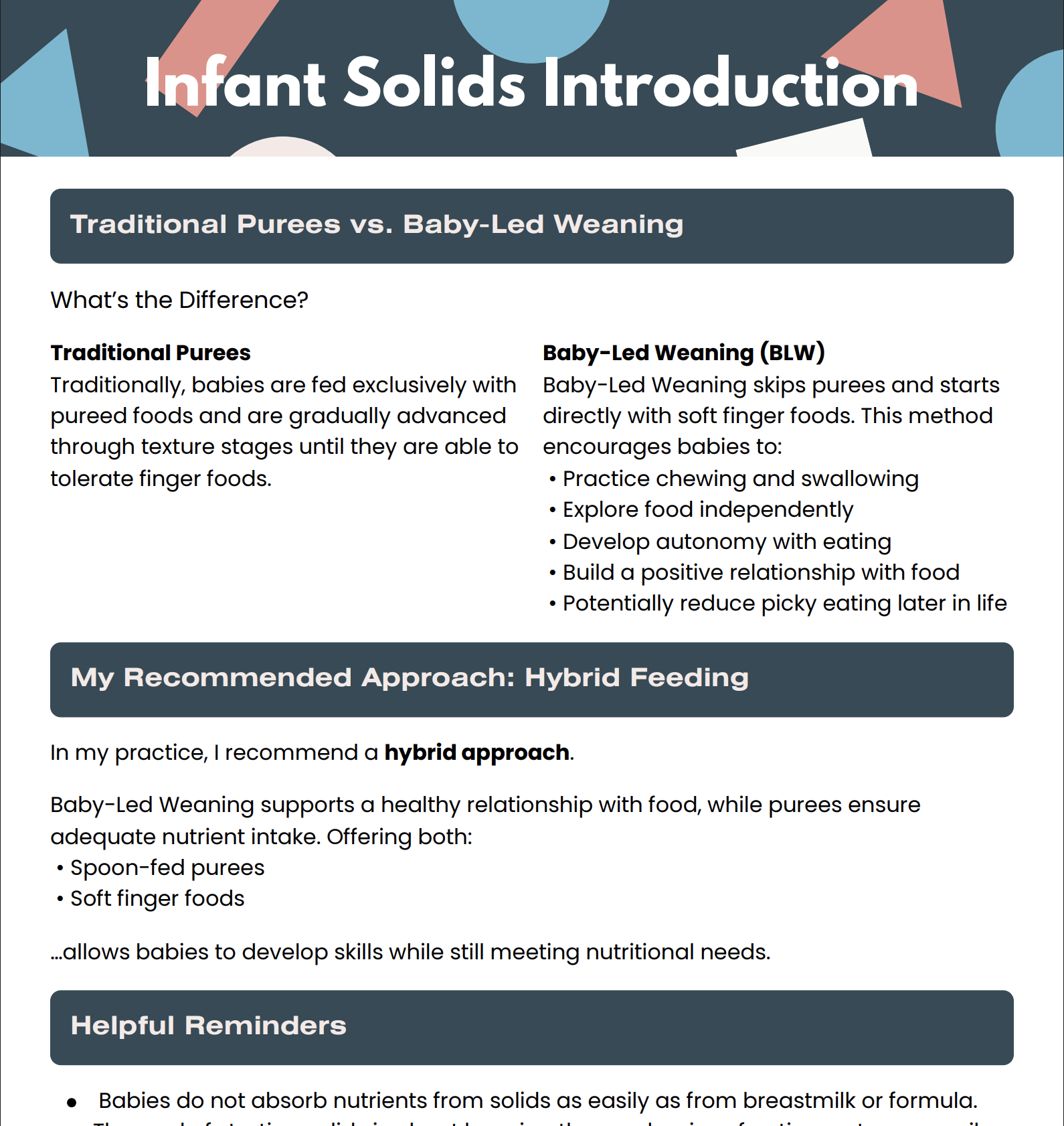
Understand the difference between traditional spoon-feeding and baby-led weaning — plus how to use a hybrid approach that combines the benefits of both.
Get clear guidance on how and when to introduce common allergens like peanut, egg, dairy, and fish safely to help reduce the risk of food allergies.
Follow a structured food timeline organized by age so you always know what foods to offer next.
Includes a printable tracker so you can record foods tried and note any reactions, making it easier to spot sensitivities and share information with your pediatrician.
The transition from milk to solid food plays a critical role in:
• Nutrient intake (especially iron and zinc)
• Gut health and digestion
• Immune system development
• Oral motor skills and chewing
• Long-term food preferences
Starting solids with the right information helps prevent common problems like:
❌ Gagging and feeding stress
❌ Iron deficiency
❌ Texture refusal
❌ Delayed allergen exposure
❌ Picky eating patterns
This guide helps you introduce solid foods in a way that supports both nutrition and emotional wellbeing.
This Infant Solids Introduction PDF is perfect for:
✔ First-time parents
✔ Breastfeeding or formula-feeding families
✔ Parents interested in baby-led weaning
✔ Parents who prefer spoon-feeding purees
✔ Families wanting to reduce allergy risk
✔ Caregivers, doulas, and postpartum professionals
Whether you plan to use purees, baby-led weaning, or a combination of both, this guide meets you where you are.
Introducing solid foods is one of the most exciting — and confusing — milestones of infancy. Between conflicting advice, fear of choking, and questions about allergens, many parents feel overwhelmed before the first bite even happens.
The Infant Solids Introduction Guide (PDF) takes the stress out of starting solids by giving you a clear, developmentally appropriate roadmap for feeding your baby safely and confidently.
This printable guide is designed for parents who want to:
✔ Know when their baby is ready for solids
✔ Understand what foods to introduce first
✔ Reduce the risk of food allergies
✔ Support healthy digestion and nutrient intake
✔ Build positive eating habits from the start
This comprehensive guide walks you through every step of the solid food journey with practical, easy-to-follow information.
Learn how to tell when your baby is truly ready for solid foods — including physical and developmental cues — so you don’t start too early or too late.
Discover the best nutrient-dense first foods, including iron-rich options that support brain development and growth.
Understand the difference between traditional spoon-feeding and baby-led weaning — plus how to use a hybrid approach that combines the benefits of both.
Get clear guidance on how and when to introduce common allergens like peanut, egg, dairy, and fish safely to help reduce the risk of food allergies.
Follow a structured food timeline organized by age so you always know what foods to offer next.
Includes a printable tracker so you can record foods tried and note any reactions, making it easier to spot sensitivities and share information with your pediatrician.
The transition from milk to solid food plays a critical role in:
• Nutrient intake (especially iron and zinc)
• Gut health and digestion
• Immune system development
• Oral motor skills and chewing
• Long-term food preferences
Starting solids with the right information helps prevent common problems like:
❌ Gagging and feeding stress
❌ Iron deficiency
❌ Texture refusal
❌ Delayed allergen exposure
❌ Picky eating patterns
This guide helps you introduce solid foods in a way that supports both nutrition and emotional wellbeing.
This Infant Solids Introduction PDF is perfect for:
✔ First-time parents
✔ Breastfeeding or formula-feeding families
✔ Parents interested in baby-led weaning
✔ Parents who prefer spoon-feeding purees
✔ Families wanting to reduce allergy risk
✔ Caregivers, doulas, and postpartum professionals
Whether you plan to use purees, baby-led weaning, or a combination of both, this guide meets you where you are.